


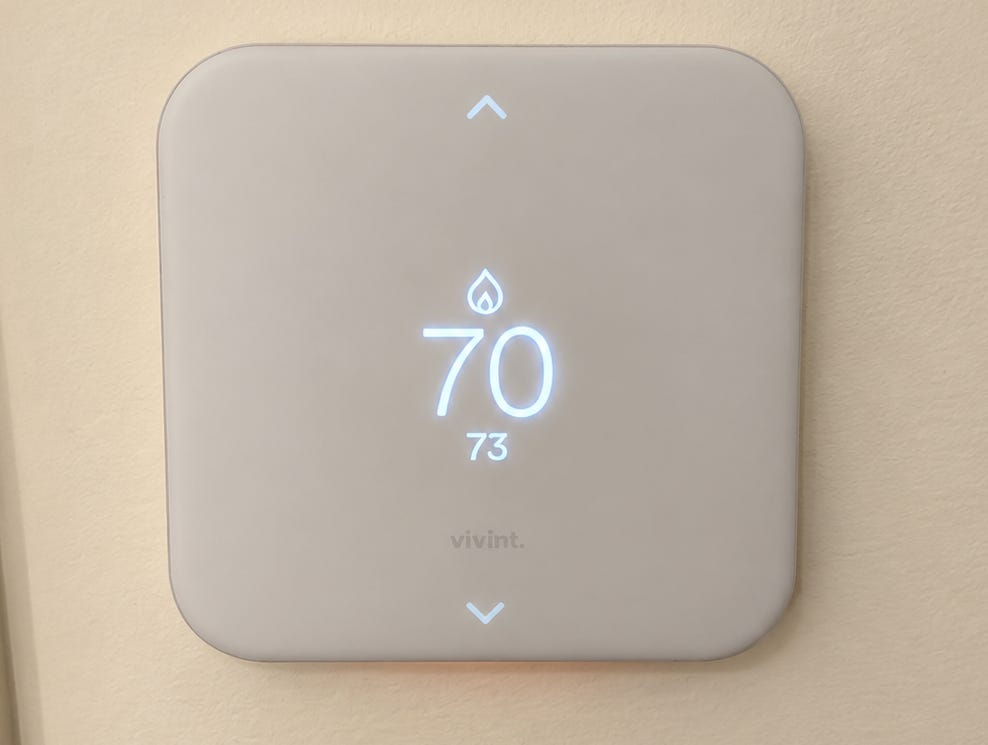
Home security company Vivint has announced something super cool. It’s a product called Comfort IQ and it uses a central thermostat and the company’s motion sensors, door sensors, and cameras to tell their app how and when to turn on your HVAC system.
Other smart thermostats aren’t very smart. Because these wall warts usually hang out in one room or in the middle of a hall, they can “see” only a small portion of your house. Busy in the basement and your thermostat is upstairs? Many thermostats would simply turn off because they think the house is empty. Vivint’s system would sense you moving around and note that you hadn’t left the house and keep you toasty or cool as needed
.
That makes sense because heating and cooling are among the biggest energy expenses in a typical home. A thermostat programmed to keep the house at 72 degrees until 5 p.m. doesn’t necessarily know that everyone left at noon. Vivint already has sensors throughout many of its customers’ homes, so Comfort IQ essentially gives the thermostat access to more of that information.
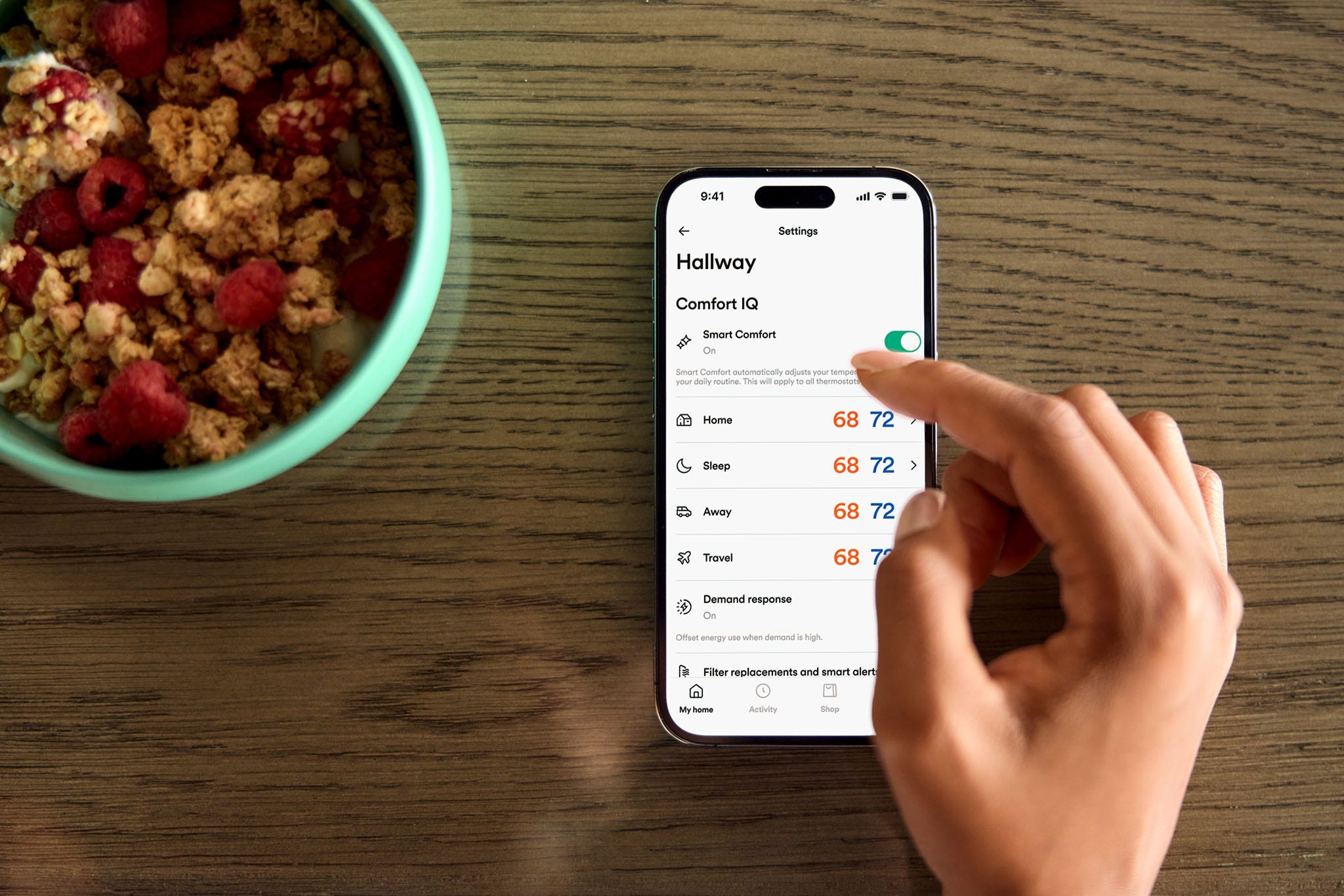
Vivint says the system works with existing gas or electric HVAC equipment and runs largely in the background. Users set their preferences in the Vivint app and Comfort IQ handles the adjustments rather than requiring them to build and maintain a thermostat schedule.
The company is making some substantial savings claims. According to Vivint, an independent year-long study by Tierra Resource Consultants looked at 50,000 Vivint households across five U.S. climate zones and found that Comfort IQ reduced HVAC runtime by an average of 13%. Cooling runtime fell by nearly 16% and heating by almost 12%.
Vivint says that translated into average annual household energy savings of about $210, with savings reaching as much as $300 in some areas. The company also says homes using Comfort IQ produced three times the energy savings of the average ENERGY STAR-certified smart thermostat. Those figures come from the study commissioned around Vivint’s system, so your actual savings will depend on the house, climate, energy prices and how you already use your HVAC system.
There are a few other practical touches. Comfort IQ can track actual HVAC runtime and use it to remind you when an air filter needs replacing rather than simply nagging you every few months. It can also connect with virtual power plants and utility demand-response programs, potentially allowing HVAC use to respond to conditions on the electrical grid.
Vivint says more features are coming, including better occupancy and scheduling models, additional HVAC intelligence, personalized energy capacity scores and tools for tracking savings over time.
You won’t need a new air conditioner or furnace to try it, but you will need a Vivint Smart Thermostat and, naturally, you’re going to get more out of the system if you already have other Vivint hardware feeding it information. Current Vivint thermostat customers can opt into Comfort IQ for free through the company’s app.
The interesting part here isn’t really the AI label. Smart thermostats have been trying to automate temperature control for years. Comfort IQ’s advantage is potentially the amount of information it can use to make those decisions. If your security system already knows whether people are moving around the house, it makes sense to let the thermostat know too.
This is literally the first time I’ve seen anything like this which is wild. After a decade of smart thermostats that claim to save energy and keep tabs on who’s in the home, Vivint has finally pulled it off.