


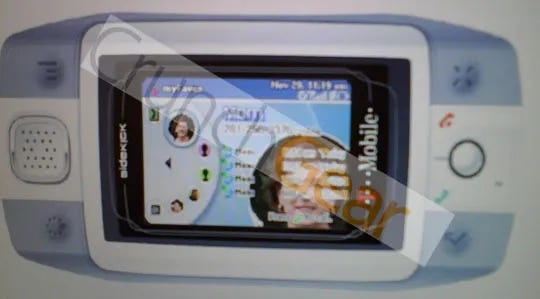
Before every smartphone became a featureless rectangle of glass, there was the T-Mobile Sidekick. It was chunky, colorful, and equipped with a screen that flipped open to reveal a full keyboard. It was also one of the first phones that made being online all the time feel normal.
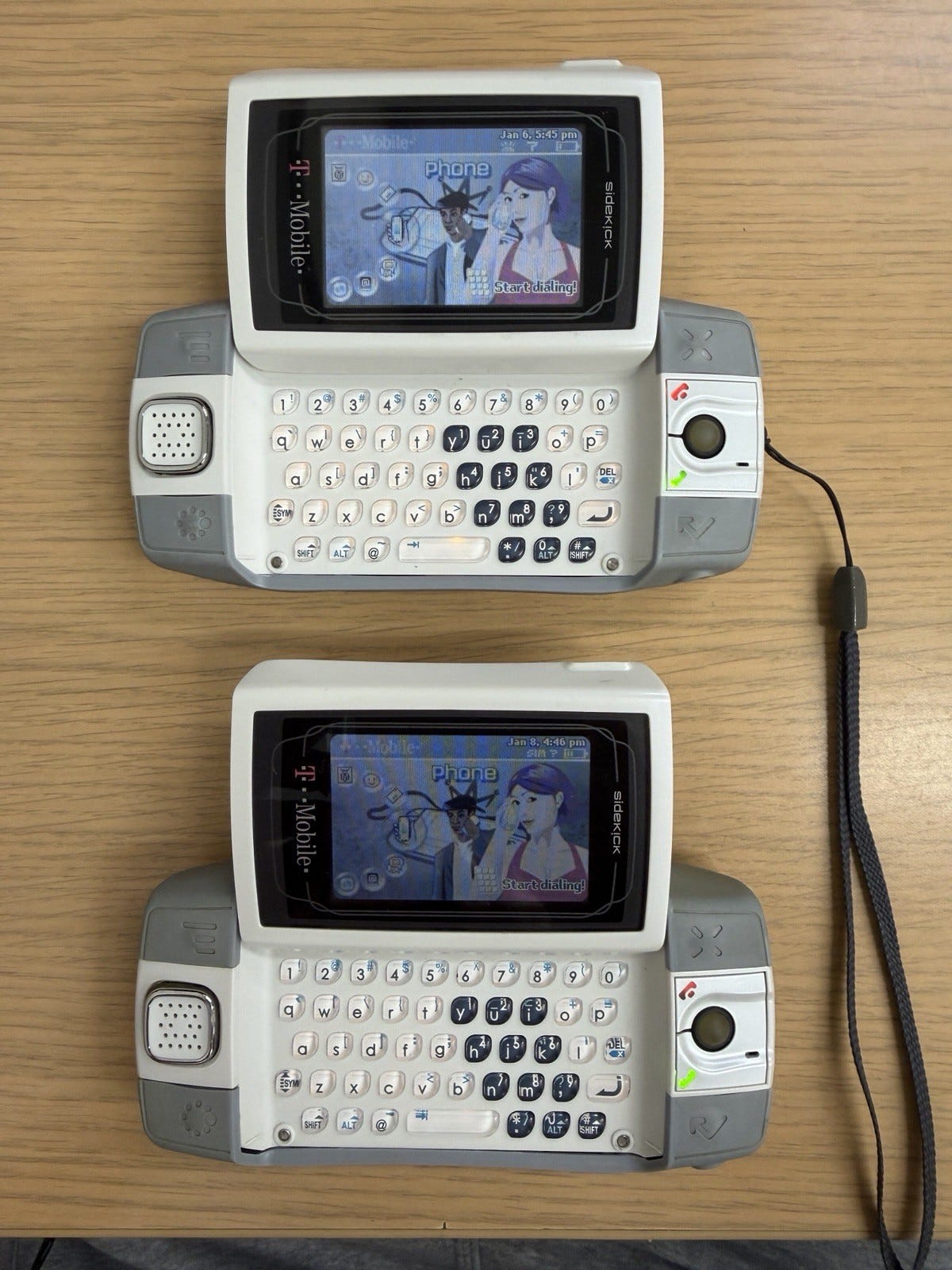
The Sidekick was more than a phone. It was a portable instant messenger (AIM was the service of choice), email client, web browser, and social hub. At a time when most people were still struggling to type text messages using a numeric keypad, Sidekick owners were firing off messages on tiny QWERTY keyboards, chatting with friends, and checking their email from practically anywhere.
The best part? Unlike the stodgy Blackberry and its janky operating system, the Sidekick was fun. Some models had a little rollerball that let you pick the app you wanted to launch and the entire package was trendy, colorful, and fun.
For a few years in the 2000s, it was arguably the coolest piece of technology you could carry.
The Beginning: Danger, Inc. and the Hiptop
The Sidekick story begins in 1999 with a Silicon Valley startup called Danger, Inc. Founded by Andy Rubin, Joe Britt, and Matt Hershenson, the company wanted to build a mobile device designed around internet connectivity rather than traditional phone calls.
Rubin would later become famous for co-creating Android, but his earlier work at Danger helped establish many of the ideas that would define modern smartphones.
Before the T-Mobile Sidekick became one of the most recognizable mobile devices of the 2000s however, it was supposed to be a $1 keychain accessory that received data over FM radio.
At the time, the internet was dominated by portals like Yahoo and AOL, which offered email, calendars, news, and other services through a single website. These companies wanted users to spend as much time as possible on their sites, but there was a problem: most people could only access the internet from a desktop computer.
As one early Danger employee, Chris DeSalvo, recalled, “The huge problem facing portal developers then was that they only had access to users while they were at their desktop computer, often only at work.”
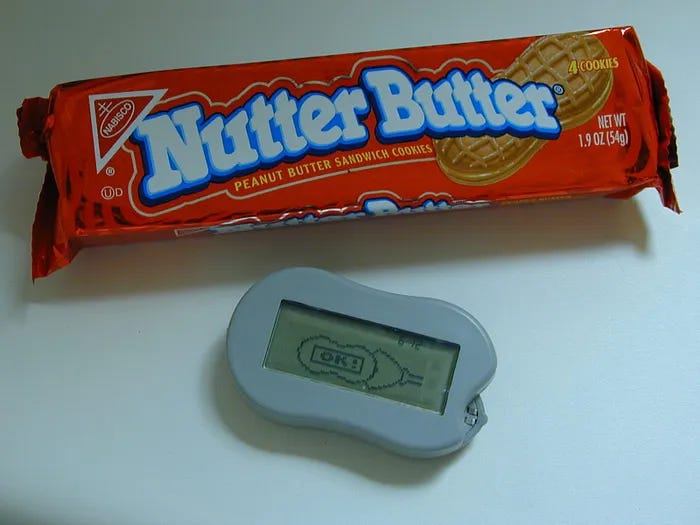
Danger’s first answer was a small device code-named Peanut. It had a basic LCD screen and a few buttons, and its purpose was to carry information from a user’s online account, including calendar entries, to-do lists, and recent emails.
The business model was unusual. Danger planned to sell Peanut to consumers for just $1, then charge internet portals a monthly fee to keep the devices updated. The hope was that Yahoo and other portal operators would pay to keep their users connected even when they were away from their computers.
Getting information onto Peanut required some creative engineering. Users could place the device in a dock connected to a computer’s serial port, then visit a website that used a custom browser plugin to transfer data. Danger even experimented with synchronized advertising, displaying an advertisement on the computer while showing a related animated ad on Peanut’s tiny screen.
The company also planned to deliver updates wirelessly using FM radio subcarriers. Danger would lease bandwidth from radio stations across the country and broadcast small amounts of data to devices within range.
The technology worked, and the company considered ways to use it for location-based advertising. Retailers could install low-power transmitters that would send promotional offers to people walking nearby.
“We liked to talk about folks walking past a Starbucks, having their Peanut go <ding>, looking down at it, and seeing that they’d just received a 10% off coupon that was good for the next 5 minutes,” DeSalvo said.
Unfortunately, FM radio was a poor system for delivering personal data. Danger would have needed agreements with radio stations across the country, along with equipment installed at each location. The system also had no reliable way to determine where users were traveling.
Danger considered broadcasting a user’s information from the transmitter closest to their home ZIP code, then gradually distributing updates to other cities in case they traveled. It was complicated, expensive, and unreliable.
“Anyway, it turned out to be a really bad idea,” DeSalvo said.
The breakthrough came when one of Danger’s venture capital partners calculated that building a nationwide FM data network could cost roughly as much as developing a two-way wireless device using GSM cellular networks.
The newer GPRS data service offered something Peanut could not: a device that could both send and receive information without being connected to a desktop computer.
Danger also found a willing network partner in VoiceStream, a relatively small wireless carrier that had emerged from Western Wireless. VoiceStream was looking for devices that could demonstrate the potential of its mobile data network. The company would later be acquired by Deutsche Telekom and renamed T-Mobile.
With a cellular network available, Danger abandoned Peanut and began developing an entirely different product.
“We weren’t exactly sure what it was going to be, but we all knew that we wanted one,” the DeSalvo said. “Since there wasn’t really anything in the marketplace to model ourselves after we just built the thing we all wanted to have.”
That decision eventually produced the Hiptop, launched in 2002 and sold in the United States as the T-Mobile Sidekick.
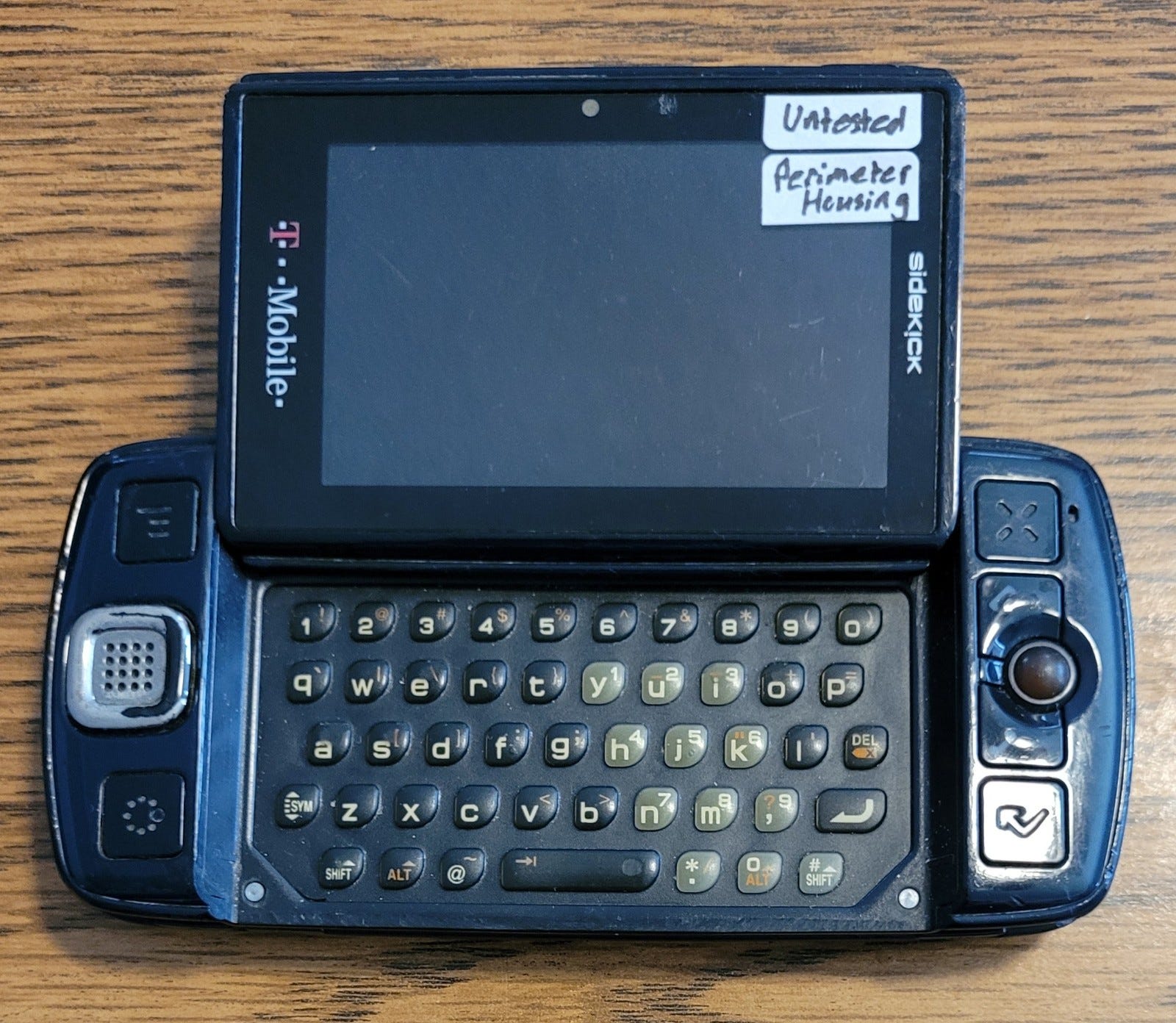
The original Sidekick had a monochrome screen, a physical keyboard, a scroll wheel, and a distinctive rotating display. Instead of opening like a clamshell phone, the screen swung sideways to expose the keyboard underneath.
The mechanism was instantly recognizable. Opening a Sidekick became part of the experience, and the movement itself was almost as satisfying as using the phone.
More importantly, the Sidekick was built around data. It offered web browsing, email, instant messaging, and a constantly connected experience over T-Mobile’s GPRS network.
The Sidekick II and the Birth of a Cultural Phenomenon
The original Sidekick was a technological curiosity. The Sidekick II, released in 2004, turned it into a cultural phenomenon.
Manufactured by Sharp, the second-generation device featured a slimmer body, an integrated camera, and a more refined design. It retained the rotating screen and full keyboard, which had become the Sidekick’s defining features.
By this point, the device was finding an audience among teenagers, musicians, actors, and celebrities. Paris Hilton famously carried one, and the Sidekick became a fixture in celebrity photographs and entertainment coverage.
Part of its appeal was practical. AOL Instant Messenger was enormously popular, and the Sidekick made it possible to maintain conversations without sitting at a computer. Its keyboard made long messages easy to type, while its interface put communication at the center of the experience.
There was also a sense of exclusivity. BlackBerry devices were associated with executives and businesspeople. The Sidekick was for people who wanted to talk to their friends.
The phone became a fashion accessory as much as a communications device. Special editions, including collaborations with Juicy Couture and tattoo artist Mister Cartoon, reinforced that identity.
In retrospect, the Sidekick II helped establish the idea that a smartphone could be a personal expression rather than simply a business tool.
The Sidekick III and the Peak of the Platform
The Sidekick 3 arrived with a new trackball navigation system, Bluetooth connectivity, a music player, and support for faster EDGE data connections. It also offered expandable storage, bringing the device closer to the multimedia smartphones that would soon dominate the market.
T-Mobile continued expanding the lineup. The budget-oriented Sidekick iD appeared in 2007, followed by the larger-screen Sidekick LX and the Motorola-manufactured Sidekick Slide.
The Slide abandoned the traditional rotating display in favor of a sliding mechanism, but the LX retained the familiar design.
The Sidekick LX became particularly popular thanks to its larger screen, distinctive appearance, and emphasis on messaging. By this point, the Sidekick had developed something that few consumer electronics products achieve: a recognizable identity. You could spot one across a room.
That identity was also becoming a limitation. The Sidekick’s software and hardware were designed around messaging at a time when the broader smartphone market was beginning to change. That said, what the Sidekick was doing before anyone else was vitally important and points to the future of mobility.
The Sidekick Was an Early Cloud Smartphone
One of the Sidekick’s most important innovations was largely invisible.
Danger designed its platform around servers that synchronized information between the device and the internet. Contacts, calendars, messages, and other information were tied to online services rather than existing exclusively on the phone.
Today, this sounds ordinary. In 2002, it was a significant departure from how most mobile devices worked.
The architecture allowed Sidekick users to access online services without managing complicated synchronization software. It also supported an application catalog, providing a relatively simple way to add functionality to the device.
In many ways, the Sidekick anticipated the connected smartphone ecosystem that Apple and Google would later popularize. Long before cloud storage became a standard feature of mobile phones, Danger had built a system that automatically synchronized contacts, calendars, messages, and other personal information with remote servers. Users could lose or replace their phones and recover much of their data simply by signing into their accounts. The Sidekick also offered downloadable applications, instant messaging, web browsing, and email in a single device, years before the modern smartphone became commonplace.
But there was a catch. Unlike phones that stored most personal information locally, the Sidekick depended heavily on Danger’s servers to manage and preserve user data. This made the device remarkably convenient when everything worked, but it also meant that users had limited control over their own information. A problem with the central servers could affect thousands of customers at once, regardless of whether their individual phones were working properly.
That weakness became painfully clear in October 2009, when a major server failure left T-Mobile Sidekick customers unable to access personal information stored in the cloud. Microsoft, which had acquired Danger in 2008 for a reported $500 million, initially warned that contacts, calendar entries, photographs, and other data might have been permanently lost. The incident quickly became a public relations disaster for both Microsoft and T-Mobile, particularly because the Sidekick had been marketed around the convenience of keeping personal information synchronized and protected.
Microsoft eventually recovered most of the affected data, but the damage to the Sidekick’s reputation was considerable. The outage showed that cloud storage was only as reliable as the systems maintaining it. It also exposed the risks of placing essential personal information in the hands of a single service provider without adequate backup and recovery procedures.
The irony was that the Sidekick had helped establish many of the features that would define the next generation of smartphones. Its dependence on centralized services was not fundamentally different from the direction Apple and Google would take with their own mobile platforms. The difference was that those companies would build much larger ecosystems around their devices, with more developed systems for storing, synchronizing, and recovering user information. The Sidekick had demonstrated the appeal of a constantly connected phone, but the 2009 outage also showed what could happen when the infrastructure behind that connection failed.
The Last Sidekick
T-Mobile stopped selling the original Danger-based Sidekick models in 2010.
The following year, the company attempted to revive the brand with the Sidekick 4G, manufactured by Samsung.
The new phone ran Android rather than Danger’s original operating system. It featured a 3.5-inch touchscreen, a five-row physical keyboard, and a new pop-tilt mechanism that paid tribute to the rotating displays of earlier Sidekicks.
It was a reasonable attempt to combine the Sidekick’s identity with a modern smartphone platform.
But the market had moved on. Touchscreen smartphones were becoming the default, and the physical keyboards that had once made the Sidekick so appealing were increasingly viewed as unnecessary.
On May 31, 2011, the original Danger online services shut down, marking the end of the platform that had powered the Sidekick for nearly a decade.
The Samsung Sidekick 4G would be the last conventional smartphone to carry the name.
Why the Sidekick Still Matters
The Sidekick occupies an unusual place in technology history. It wasn’t the first smartphone, and it certainly wasn’t the most powerful. Its cameras were primitive, its internet connections were slow, and its software eventually became outdated.
But it understood something about mobile computing before much of the industry did: people wanted to be connected to their friends all the time.
The Sidekick made that possible through a combination of hardware, software, and online services that felt remarkably cohesive for its era.
It also made smartphones fun. The rotating screen, colorful designs, physical keyboard, and emphasis on instant messaging gave the device a personality that is largely absent from modern phones. Today’s smartphones are vastly more capable, but they are also remarkably similar. Most are thin slabs with large touchscreens and nearly identical interfaces.
The Sidekick came from a period when manufacturers were still experimenting with what a connected mobile device should look like. There is a reason people still remember the satisfying movement of its screen, the feel of its keyboard, and the experience of chatting with friends on AIM.
The Sidekick wasn’t simply a phone that happened to have internet access. It was an early example of what would happen when the internet became something people carried everywhere.
And for a few years, it made that future look pretty cool.