


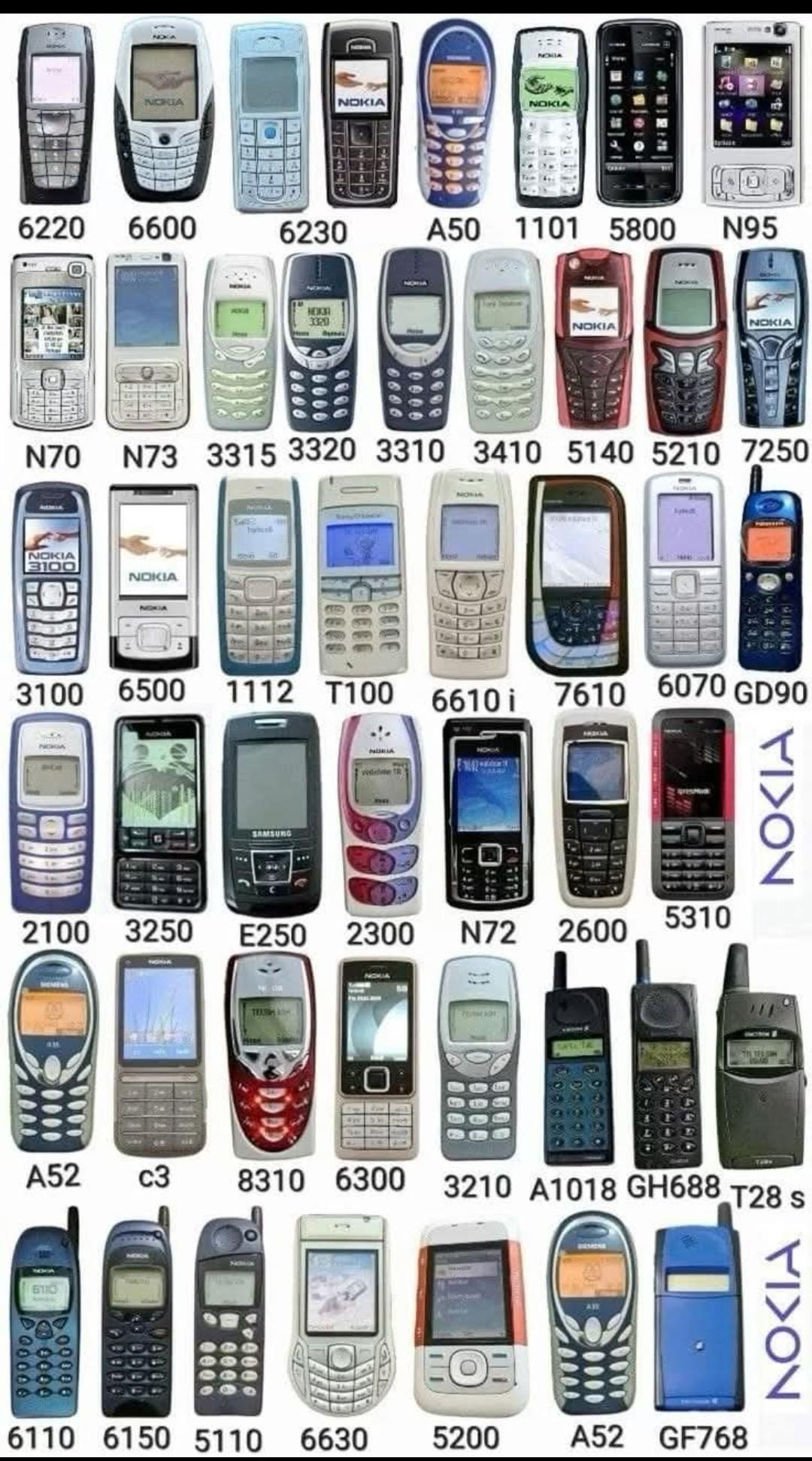
There was a time when Nokia could do no wrong. The Finnish company dominated the cellphone business, producing everything from tiny candybar phones to bizarre experiments that seemed to come from a designer who had been given too much coffee and no supervision.
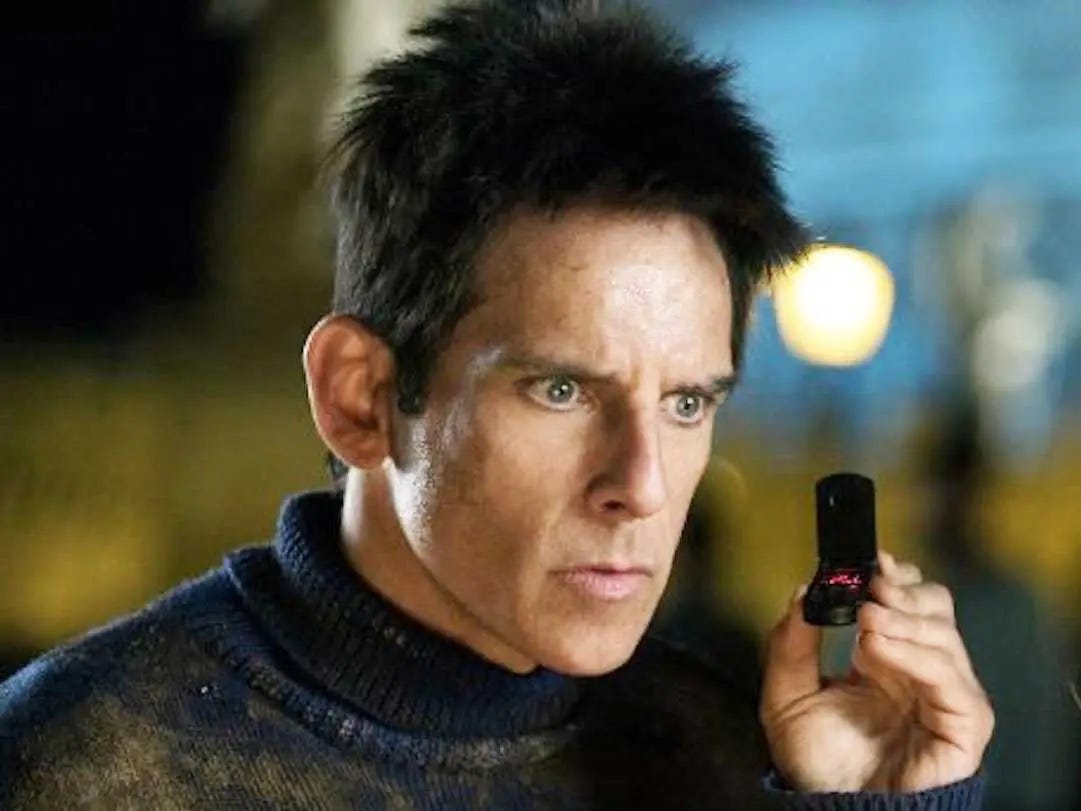
If you had a Nokia, you had the cutting edge. Whether you wanted the smallest phone in Europe or something that could run Snake in full color, Nokia had your back. These phones were obviously glorified walkie-talkies with very little processing power, but damn if Nokia didn’t make them look great.
And then there was the N-Gage.
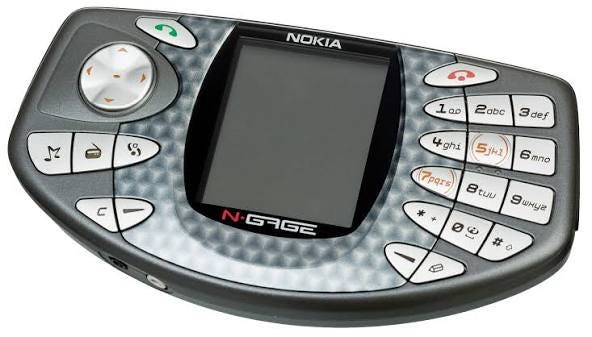
Released on October 7, 2003, the N-Gage was Nokia’s attempt to take on Nintendo with a device that combined a portable gaming console, cellphone, MP3 player and wireless multiplayer system. It cost $299, looked like a taco and required you to take out the battery to change games.
It was, in short, a magnificent disaster.
But the funny thing about the N-Gage is that Nokia wasn’t entirely wrong. The company understood that people would eventually want to play serious games on their phones. It understood that wireless connectivity would change gaming. It even understood that digital distribution would eventually replace physical cartridges.
What Nokia didn’t understand was how to make any of that pleasant to use.
A Game Boy with a phone attached
The N-Gage arrived when Nintendo’s Game Boy Advance was the undisputed king of portable gaming. Cellphones, meanwhile, were mostly used for calling, texting and playing, well, Snake.
Nokia wanted to change that.
The N-Gage ran Symbian’s Series 60 operating system and featured a 176-by-208-pixel color display, Bluetooth connectivity, GPRS networking, an FM radio and an MP3 player. Games came on removable MMC cards, and the launch lineup included titles like Sonic N, Tomb Raider and Tony Hawk’s Pro Skater.
On paper, this was a remarkable piece of hardware. You could play games, listen to music, call your friends and even compete against other players wirelessly.
Nokia also had the money to make the idea work. As Wired reported in September 2003, the company was spending heavily on marketing and securing deals with major game publishers, including Electronic Arts.
Nokia plans to debut N-Gage Oct. 7, in time for the Christmas season. In the weeks leading up to the launch, the company has lined up a partnership with Electronic Arts, the biggest game publisher in the world. In addition, Nokia is spending tens of millions of dollars on advertising for the combination cell phone and game player. And Nokia is planning to compete directly against Nintendo and Sony in the mobile game market — by selling N-Gage through outlets that don’t have anything to do with cell phones, like gaming retailers.
In other words, Nokia wasn’t treating the N-Gage as a side project. It wanted a serious piece of Nintendo’s business.
There was just one problem: Nintendo kind of knew how to build gaming hardware, and Nokia knew how to build phones. The N-Gage was an uncomfortable compromise between the two.
The taco problem
The N-Gage’s most famous design feature was something nobody actually wanted.
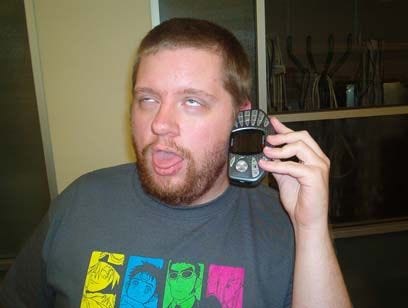
To make a phone call, you had to hold the device sideways against your ear. Nokia had placed the speaker and microphone along its narrow edge, making users look as though they were talking into a taco. The internet immediately noticed.
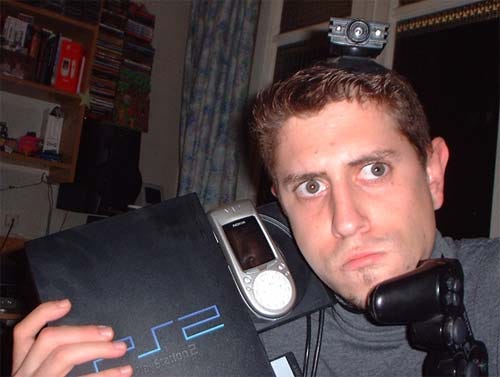
The practice became known as sidetalking, and the resulting photographs and jokes became an early example of internet culture turning a product into a punchline. This was a huge deal in 2003 Internet terms. A company like Nokia getting ribbed online was a brand new thing, something PR people and comms folks weren’t ready for. Who could insult Nokia, the undisputed giant of cellphonery?
But sidetalking wasn’t all. The phone’s other design decisions weren’t much better.
The screen was oriented vertically, which made little sense for games that traditionally worked better in landscape mode. The buttons were cramped, and the telephone keypad had to serve double duty as gaming controls.
Worst of all, changing games required removing the back cover and battery. You then inserted another MMC card, replaced the battery and restarted the phone.
Imagine having to turn off your Nintendo Switch and remove its battery every time you wanted to play something else. Arguably you had to do the same thing with the NES back in the 1980s but in 2003? That just didn’t fly.
Nokia had managed to make the most basic part of using a game console unnecessarily difficult.
The price didn’t help. At $299, the N-Gage cost roughly three times as much as a Game Boy Advance. Customers could buy Nintendo’s handheld and a separate phone for considerably less.
Early sales were disappointing. GameSpot reported in December 2003 that one industry survey estimated fewer than 5,000 N-Gage units had been sold to American consumers during its first week. Nokia had expected to sell between six million and nine million units by the end of 2004. That ambition was never realized.
Nokia tries again
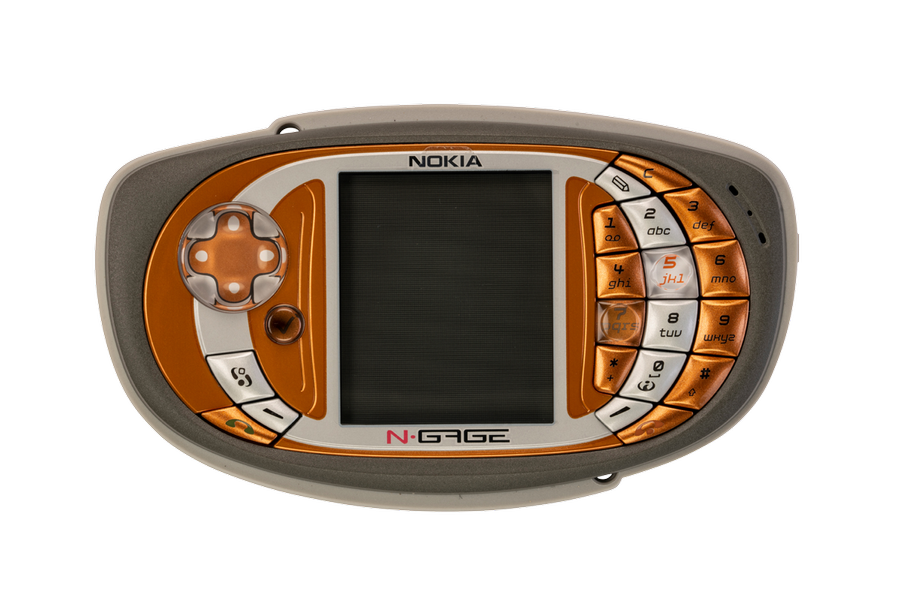
In 2004, Nokia introduced the N-Gage QD, a revised version that addressed several of the original device’s worst problems. The QD was smaller, featured improved gaming controls and, thankfully, allowed users to change game cards without dismantling the phone. Nokia also moved the speaker and microphone so owners could make calls like normal human beings.
The new model was cheaper, too, launching at $199.
It was a better product, but it couldn’t escape the reputation of its predecessor.
By then, the N-Gage had become synonymous with bad industrial design. Nokia was also competing against Nintendo’s next generation of handheld hardware, while Sony was preparing its PlayStation Portable.
The company eventually abandoned the dedicated N-Gage hardware, but it wasn’t ready to abandon mobile gaming. Instead, Nokia began turning N-Gage into a software platform that could run on other Nokia smartphones.
I remember covering that transition for TechCrunch.
In September 2006, reporting from CTIA in Los Angeles, I wrote about Nokia’s plans to bring the N-Gage platform to Series 60 phones. The idea was interesting because it removed the need to buy a strange, dedicated gaming device.
Nokia could turn millions of ordinary phones into gaming machines. That was a far better idea than selling people another taco.
The second coming of N-Gage
By 2007, Nokia was preparing a renewed push into mobile gaming, with N-Gage becoming a service available on compatible smartphones.
The N81 and N81 8GB were among the devices selected for the platform. Nokia promised downloadable games, online features and a more connected gaming experience.
But the rollout was slow, device support was limited and the competition was changing.
In December 2007, I wrote a TechCrunch post called “Meanwhile, uptown, the N-Gage appears.”
I wasn’t particularly optimistic.
Way to destroy our hopes for a usable gaming system for Nokia phones that will never be as good as standalone consoles like the DS or PSP and will be considered an afterthought by all but the most dedicated gamers and game manufacturers! Nokia announced that it would roll out its new N-Gage platform on the N81 and N81 8GB and offer “one or more games.” As one poster responded:
What about N70 and N80 cellphones? N80 can join new n-gage platform?
Don’t cut our hopes!!
Support old Nokia telephone because Iphone arrives and eat all!!!Exactly, Nokia. iPhone arrives and eat all!!!
The problem was that Nokia was still trying to create a gaming platform around a limited selection of compatible phones. Nintendo and Sony had dedicated hardware with established audiences, while Apple had introduced the iPhone earlier that year.
The iPhone didn’t initially have an App Store, but it was already clear that phones were about to change dramatically. Nokia officially launched its revamped N-Gage service in April 2008. It included downloadable games, social features and online play.
I also covered Nokia’s broader software strategy in a September 2008 article about its Ovi services. Nokia was trying to build an entire digital business around its phones, including games, music, file sharing and online services.
The company had many of the right ideas. Unfortunately, Apple and the growing Android ecosystem were making those ideas easier to use. In 2009, Nokia announced that it would stop developing new games for N-Gage and shift its attention to other distribution channels.
The experiment was effectively over.
A failure that predicted the future
Looking back, it’s difficult not to feel some affection for the N-Gage.
Yes, the hardware was ridiculous. Yes, the software was awkward. And yes, it was probably one of the worst-designed gaming devices ever sold by a major electronics company.
But consider what Nokia was trying to build in 2003.
It wanted a cellphone that could play sophisticated games, connect players over wireless networks, download content and serve as a general entertainment device.
That sounds remarkably familiar today.
Modern smartphones have become enormously successful gaming platforms. Apple’s App Store and Google Play support vast libraries of games, while cloud gaming and Bluetooth controllers have made phones capable of experiences that would have seemed impossible in 2003.
Nokia understood the destination long before most of the industry. It simply couldn’t build the product that would get consumers there.
At the time, I pointed out that people genuinely wanted the N-Gage’s central promise to work. They wanted good games on their phones. They wanted access to familiar publishers and the ability to buy new titles without carrying another piece of hardware.
Nokia had managed to take a promising concept and bury it beneath poor hardware and an increasingly confused software strategy.
Years later, I was still thinking about the device. In a 2012 TechCrunch article about Skype arriving on the PlayStation Vita, I suggested that Sony’s handheld was getting closer to becoming the N-Gage people had always wanted.
That, perhaps, is the best way to understand Nokia’s failed experiment.
The N-Gage was not a bad idea. It was a good idea executed at the wrong time, on the wrong hardware and with far too many compromises. Today, the original N-Gage is an interesting collectible, a reminder of an era when phone companies were willing to build truly strange devices in pursuit of the next big thing. I still have one somewhere in a box, waiting quietly to be sidetalked upon.
And while nobody particularly misses sidetalking or removing batteries to change games, there’s still something wonderful about a company that thought it could beat Nintendo by putting a Game Boy inside a cellphone.
It failed spectacularly, but at least it tried.