


There was a brief period around the year 2000 when technology companies seemed convinced that everything in the physical world needed a connection to the internet. Magazines, newspapers, advertisements and product packaging were all opportunities to send consumers to websites, provided somebody could invent a sufficiently complicated way to get them there.
You’ll notice what I just wrote: they wanted to put magazines and newspapers on the Internet. But not in the way we think about them now. Print publishers saw the Internet as a gaping maw about to swallow them up, a Neverending Story-esque Nothing that would destroy their bottom lines. And they are absolutely right.
The solution? Why not connect paper to the Internet in a way that would give readers just enough of an online connection but keep them headed to Borders to pick up the latest issue of Cat Fancy.
Enter the CueCat, one of the strangest computer accessories of the dot-com era.
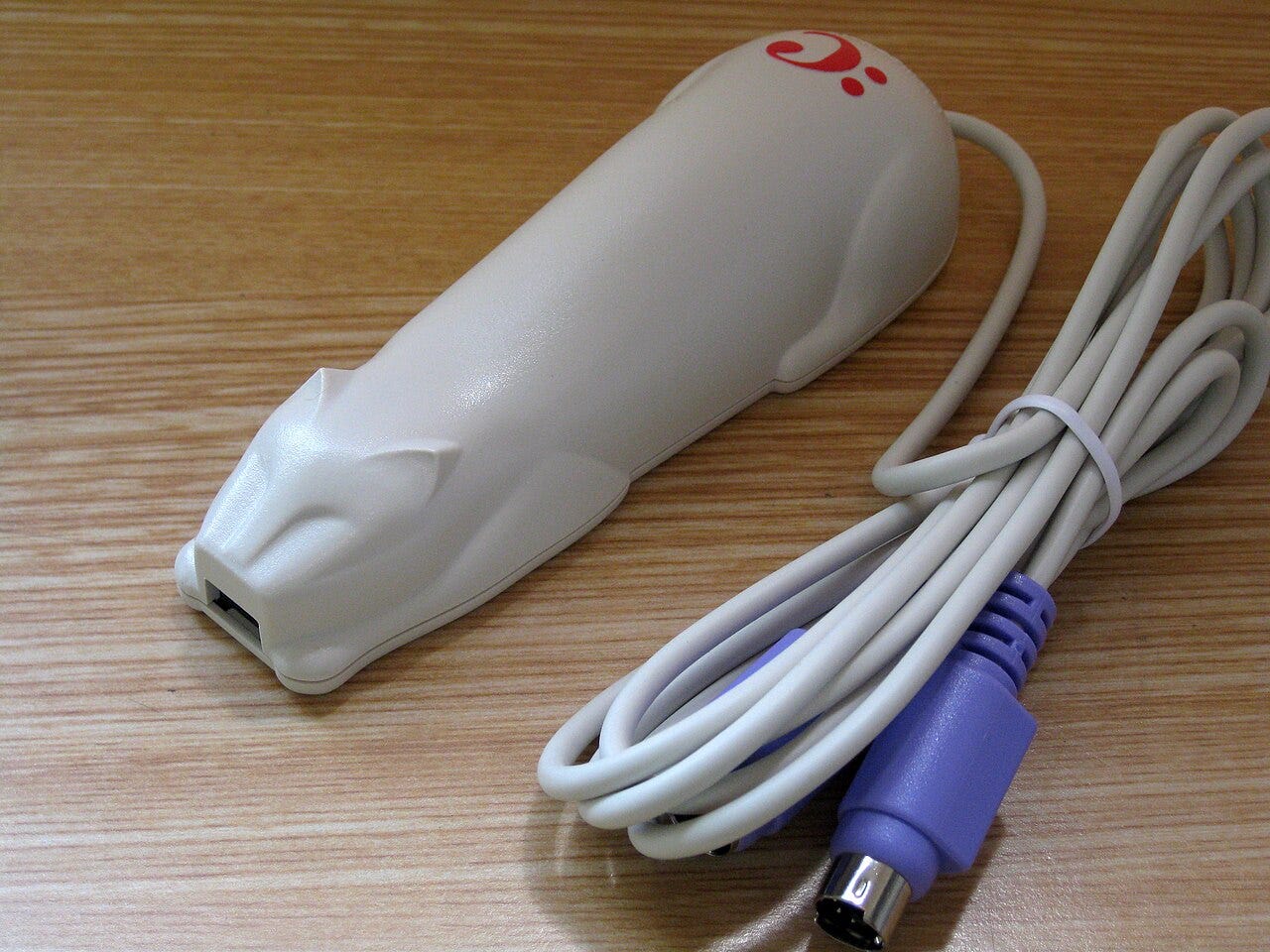
The CueCat was a small barcode scanner shaped like a cat. It connected to a computer, sat on your desk and waited for you to scan special barcodes printed in magazines and advertisements. The accompanying software would then open a related website, saving you the supposedly arduous task of typing a URL into your browser.
It was a solution to a problem that most people didn’t know they had. But for a short time, the CueCat had some of the biggest names in American publishing behind it.
A cat-shaped bridge between print and the web
The CueCat was developed by Digital Convergence, a Dallas-based company led by entrepreneur J. Jovan Philyaw, who later became known as J. Hutton Pulitzer. The device launched in 2000, at the height of the dot-com boom, when investors were willing to fund almost anything that promised to connect traditional media with the rapidly growing internet.
The idea was relatively straightforward. Instead of printing a website address in a magazine, an advertiser could print a special barcode. Readers would scan the code with their CueCat, and Digital Convergence’s software would direct their browser to the appropriate online destination.
The company called this process cueing.
The hardware itself was wonderfully peculiar. Its elongated body resembled a crouching cat, with a scanning window at the front and a tail-like cable at the back. Early units connected through a PS/2 keyboard interface, allowing the scanner to send data to the computer much like a keyboard would.
The CueCat wasn’t designed to be an independent device. It needed a computer, the company’s software and an internet connection to do anything particularly useful.
That was a lot of infrastructure to replace typing something like example.com. But, as you might recall, URLs were still deeply confusing. Further, there was no way to attribute a click to a certain magazine. If an advertiser wanted to see if someone visited their site because of a magazine ad, they needed some way to attribute interest. All of this was very primitive, to be clear, but the CueCat promised at least some level of attribution.
RadioShack and the magazine industry get involved
Digital Convergence wasn’t simply a tiny startup handing out novelty gadgets. The company secured major commercial relationships, including backing and distribution through RadioShack and partnerships with publishers.
RadioShack distributed CueCats through its stores, while magazines such as Wired and publications associated with Forbes participated in the program. Millions of scanners were produced and distributed, often at no cost to consumers.
The strategy was to build an audience first. If enough people had a CueCat on their desks, advertisers and publishers could pay to connect printed material to online content.
Digital Convergence also experimented with codes embedded in television and radio audio, extending the idea beyond printed barcodes.
In theory, it was an early version of the physical-to-digital advertising systems we now take for granted. In practice, it required consumers to install special software, register the device and keep a dedicated scanner next to their computers.
The inconvenience was considerable, particularly when the alternative was simply reading a web address.
When the cat got hacked
The CueCat had another problem, and this one was considerably more serious than the inconvenience of scanning magazine pages.
To use the official software, consumers had to register with Digital Convergence. Each scanner carried a unique identification number that could be transmitted along with scanned codes, raising concerns about the company’s ability to track individual users and their reading habits.
In September 2000, a security vulnerability exposed registration information associated with approximately 140,000 users. The incident attracted criticism at a time when consumers were becoming increasingly aware of online privacy, and Digital Convergence offered affected users a $10 RadioShack gift certificate.
Meanwhile, programmers discovered that the hardware was more useful than the company’s intended application. By modifying the scanner or using alternative software, they could turn it into a general-purpose barcode reader.
Suddenly, a device designed to send consumers to advertisers’ websites could be used to catalogue books, organise CD collections or scan grocery products. Wired documented several of these projects in December 2000, including applications that retrieved book information and product details from online databases.
Digital Convergence initially resisted this experimentation, asserting restrictions on modifying its hardware and software. That only generated more criticism. The company had given away enormous numbers of scanners, and hobbyists were finding uses for them that were arguably more practical than the original business model.
In a strange way, the CueCat became successful as a piece of hardware precisely when people stopped using it as intended.
The collapse
By 2001, the CueCat’s problems were becoming impossible to ignore. Digital Convergence had spent heavily on distribution, software and partnerships, but there was little evidence that consumers wanted to make barcode scanning part of their daily internet use.
The company had attracted roughly $185 million in investment, according to a retrospective published by Hackaday. But giving away millions of scanners was expensive, and the advertising business needed to justify that investment never developed as hoped.
In May 2001, Digital Convergence laid off most of its workforce. Major investors began writing off their investments, and the company ultimately collapsed.
The scale of the failure was remarkable. Millions of CueCats had been manufactured, with large quantities eventually ending up as surplus electronics. In 2005, a liquidator offered two million unsold units at just 30 cents apiece in bulk.
For a device that had once been promoted as a new way to navigate the internet, that was a fairly undignified ending.
The CueCat was a QR code with extra steps
The most interesting thing about the CueCat is that its underlying idea wasn’t particularly bad.
Today, scanning a printed code to open a website is completely ordinary. Restaurants use QR codes for menus, advertisers put them on posters and manufacturers print them on packaging. Most smartphones can recognise these codes using their built-in cameras, without dedicated hardware or proprietary desktop software.
The CueCat anticipated that relationship between physical media and digital content, but its implementation was unnecessarily complicated.
You needed to own the scanner, connect it to a computer, install the software, register an account and scan a compatible barcode. The computer also needed an internet connection, which in 2000 frequently meant dial-up.
QR codes eventually succeeded partly because smartphones removed nearly all those barriers. A camera was already in your pocket, and opening a website required little more than pointing it at a printed square.
There was also a fundamental difference in how the systems operated. CueCat’s original model relied on Digital Convergence’s infrastructure to interpret codes and route users to websites. Standard QR codes can directly encode web addresses, making them far less dependent on one company’s servers.
The CueCat wasn’t the only precursor to modern QR-code marketing, but it remains one of the most memorable.
A strange little piece of internet history
Today, the CueCat survives as a collectible and a curiosity among retrocomputing enthusiasts. Some owners have modified the devices to work as ordinary barcode scanners, while others keep them as reminders of an era when internet companies were willing to spend extraordinary amounts of money on speculative consumer technology.
And the CueCat deserves to be remembered for more than its failure.
It demonstrated how difficult it was to persuade consumers to adopt dedicated hardware for a task that offered only a small improvement over something they could already do. It also illustrated the risks of tying a physical product to a proprietary online service, particularly when that service depends on a business model that hasn’t been proven.
Perhaps most importantly, it showed that users sometimes understand the value of a device differently from the company that created it.
Digital Convergence wanted the CueCat to revolutionise advertising. Hackers wanted a cheap barcode scanner. Consumers mostly wanted to visit websites without having to plug a plastic cat into their computers.
Twenty-six years later, it’s hard not to appreciate the absurdity of the whole thing. The CueCat was an attempt to build a bridge between print and the internet, backed by major publishers and millions of dollars.
The bridge eventually got built. It just didn’t need the cat.