


SteelSeries is bringing ultra-wideband wireless technology to gaming mice with the launch of its new Sensei Pro and Rival Pro series. The company claims the new mice can maintain an 8,000Hz polling rate without the interference associated with traditional wireless connections, while a hot-swappable battery system lets players keep gaming without stopping to recharge.
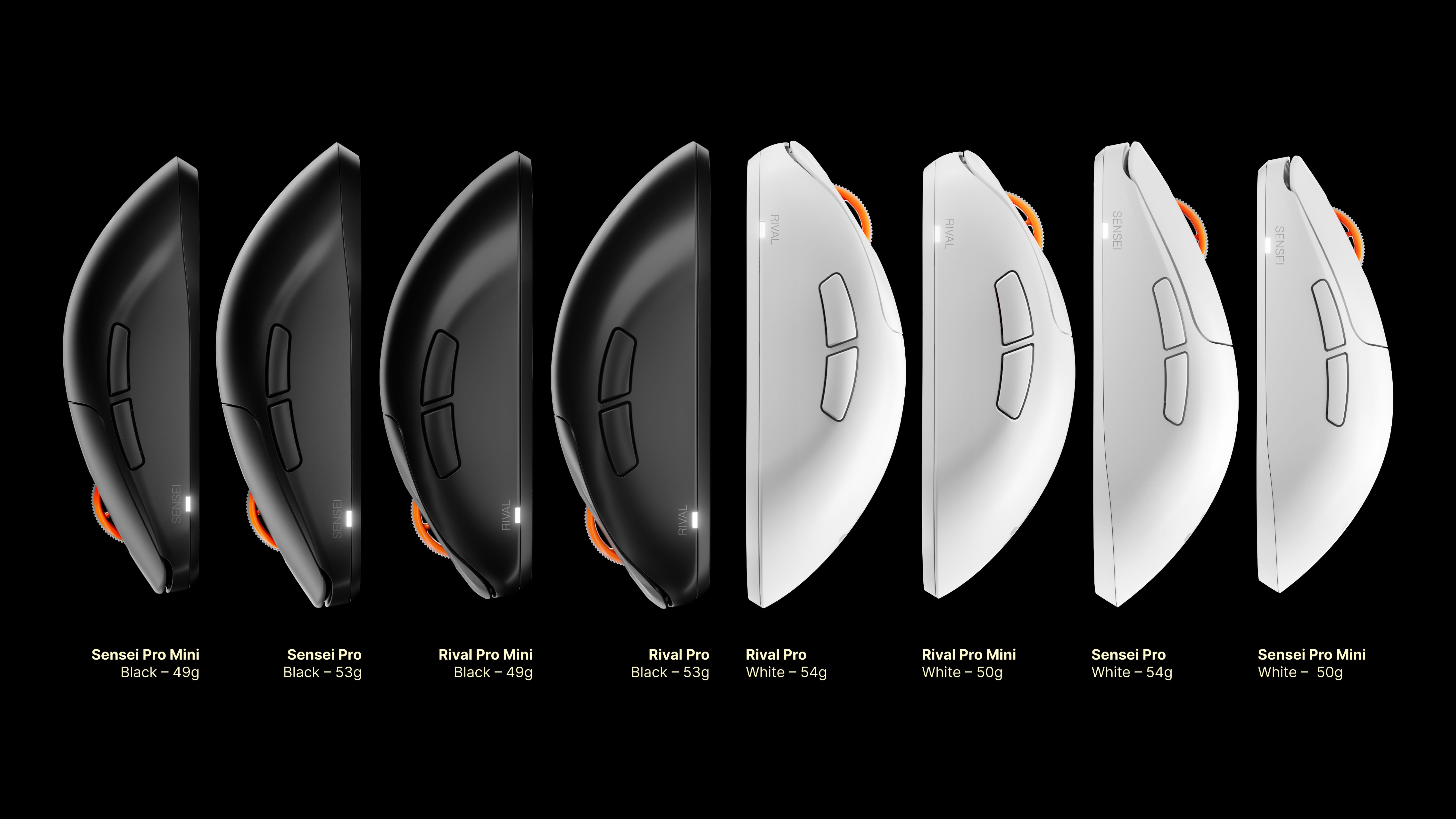
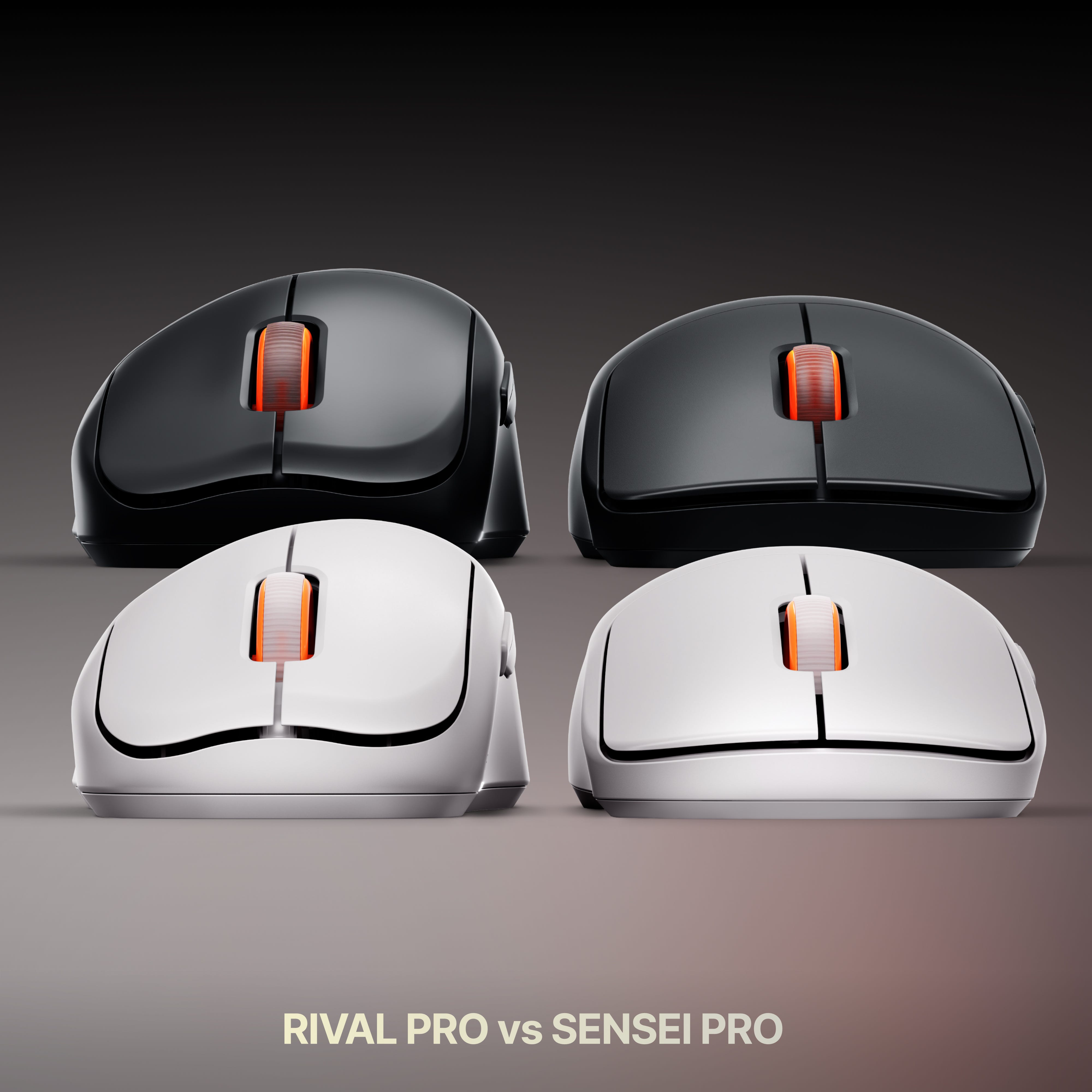
The new lineup includes four models: the Sensei Pro, Sensei Pro Mini, Rival Pro and Rival Pro Mini. All four cost $179.99, come in black or white and are available in stores beginning October 13.
The big change here is the wireless connection. Most wireless gaming mice use the crowded 2.4GHz spectrum, which is also used by keyboards, headsets and numerous other devices. SteelSeries argues that interference on this band can prevent high-performance mice from consistently delivering their advertised polling rates.
Its solution is ultra-wideband (UWB), operating between 6.4GHz and 9.056GHz. According to SteelSeries, this gives the mice access to roughly 20 times the bandwidth of traditional 2.4GHz wireless connections. The system can also use multiple wireless channels simultaneously, which the company says improves connection stability in environments crowded with competing devices.
That extra bandwidth is designed to support a true 8,000Hz polling rate. A mouse running at 8K can report its position to a computer up to 8,000 times per second, compared with 1,000 times for a conventional gaming mouse. In theory, that reduces the delay between a physical movement and the computer registering it, although the practical benefit will depend on the game, hardware and player.
SteelSeries has also introduced a Max Performance Mode that keeps the new TrueMove 42K optical sensor operating at its highest performance settings. The sensor supports 20,000 frame captures per second, tracking speeds of up to 800 inches per second and acceleration of up to 70G. The mice also use optical switches rated for 100 million clicks, with a claimed click latency of 0.35 milliseconds.
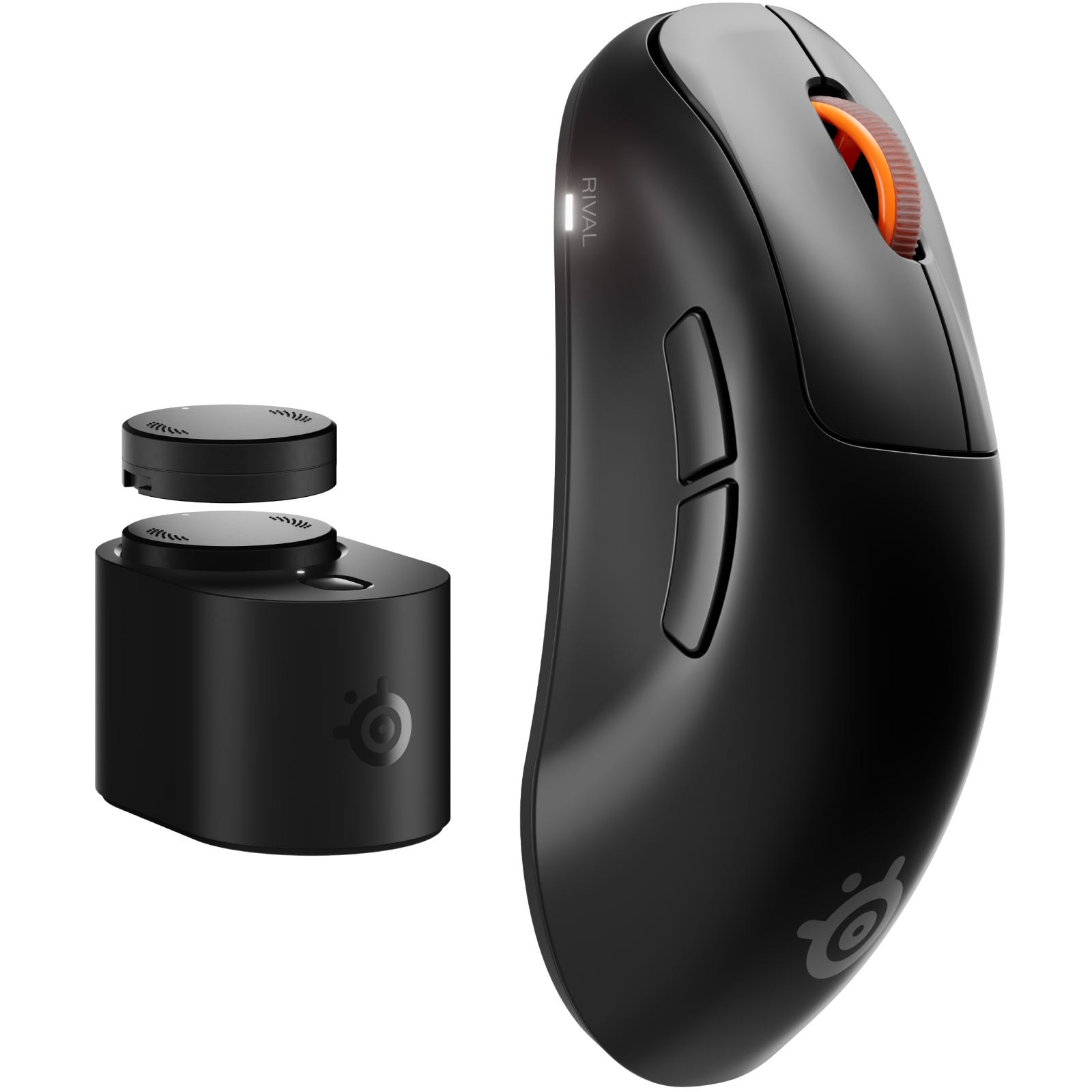
Of course, running a mouse at 8,000Hz consumes considerably more power than running it at 1,000Hz. SteelSeries addresses this with what it calls the Infinite Power System, which is essentially a pair of rechargeable, hot-swappable batteries.
Each battery provides up to 16 hours of use at 8,000Hz or 60 hours at 1,000Hz. With both batteries, users get up to 32 hours at 8K or 120 hours at 1K before needing to recharge. The idea is to keep one battery charging while the other powers the mouse, allowing players to swap batteries rather than plug in a cable.
The new mice are also relatively light. The full-size Sensei Pro and Rival Pro weigh 53 grams, while the Mini versions weigh 49 grams. SteelSeries has retained the general shapes of the original Sensei and Rival mice, which debuted in 2011 and 2013, respectively, while updating the internals for modern competitive gaming.
Software customization comes through the SteelSeries GG suite. Players can adjust lift-off distance, sensor rotation and scroll behavior, as well as use tools to find appropriate sensitivity settings. A sensitivity converter helps translate DPI preferences between games, while a 3D aim trainer provides practice for competitive shooters such as Counter-Strike 2, Valorant and Fortnite.
The interesting part of this release is that SteelSeries is trying to address two of the practical limitations of high-polling-rate wireless mice: connection reliability and battery life. An 8,000Hz polling rate looks impressive on a specification sheet, but maintaining that performance consistently is more important than simply reaching the number under ideal conditions.
Whether UWB produces a noticeable advantage over existing high-end wireless mice remains to be seen. The technology promises a cleaner connection, but the difference between 1,000Hz and 8,000Hz is already small enough that many players may struggle to notice it during normal gameplay. Independent testing will be needed to establish how consistently the mice deliver their claimed performance.
The Sensei Pro and Rival Pro series went up for preorder on September 29 and reached retail stores on October 13. All four models are priced at $179.99 in the US, €199.99 in Europe and £169.99 in the UK. SteelSeries also offers a separate wireless travel dongle for $24.99.
For competitive players who want the fastest possible wireless connection without being tied to a charging cable, the new SteelSeries mice offer an interesting approach. The real question is whether the move to UWB makes enough of a difference to justify the premium price.