


There was a time when watching your television somewhere other than your house was a fairly radical idea. Before Netflix became a streaming service, before the iPhone, and years before every television network had its own app, three guys came up with a fairly straightforward solution: take whatever was playing on your television at home and send it over the Internet.
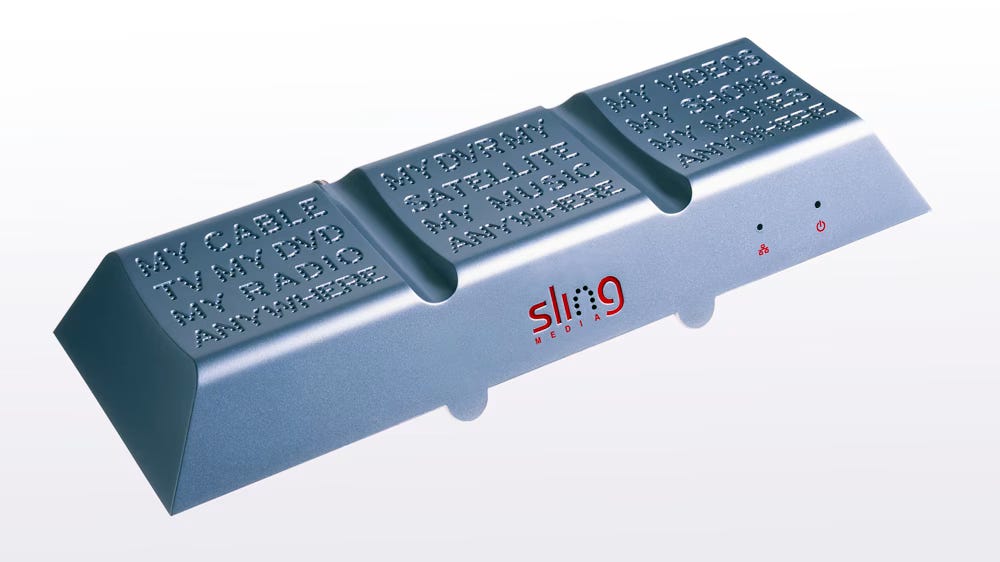
That idea became the Slingbox, one of those strange pieces of transitional technology that makes much more sense when you remember the problem it was designed to solve. In 2005, television was still attached to a place. You could have hundreds of cable channels, a TiVo full of recorded shows and a fast Internet connection, but the moment you left your house, most of that entertainment stayed behind.
The Slingbox changed that by putting your own television connection online. You plugged the box into your cable or satellite receiver and your home network, and it encoded the video so you could watch it remotely using SlingPlayer software. An infrared blaster even controlled the cable box, meaning you could sit in a hotel room in another state, change the channel on your laptop and watch the physical cable box sitting back in your living room respond.
Sling Media called the idea “placeshifting,” a play on the “timeshifting” that TiVo had popularized. TiVo let you separate a television program from the time it aired. Slingbox separated it from the place where your cable company expected you to watch it. Twenty years later, that sounds completely normal. In 2005, it was weird enough that Sling needed a new word to explain what the box did.
